The afternoon sponsor session at Nordic Summit 2026 was ALSO’s “From AI Adoption to Business Transformation”, presented by four people from their central Microsoft team: Martin, Nenad, Mathias and Peter. ALSO is a distributor rather than an implementation partner, which Martin explained at the start: they are the route to market for partners who are not managed directly by Microsoft, present in 31 countries with around 5,000 people, and their job is to support those partners with training, licensing and go-to-market rather than to do the implementation work themselves. This is a short recap of the argument they built. The framing is theirs, the summary and any mistakes are mine.
The order of operations
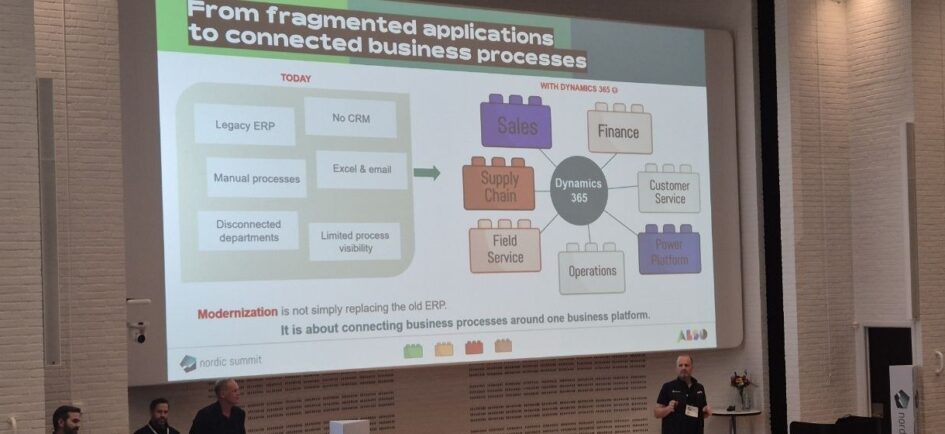
The starting picture was the familiar one: a legacy ERP, no real CRM, manual processes, Excel and email, disconnected departments and limited process visibility. Marketing says it is investing and sales sees no result; sales says it is excellent and cannot see where the leads went. The answer they argued for is not another disconnected tool but one business platform underneath the processes, which for them is Dynamics 365 across sales, finance, supply chain and service.
The line worth taking away is the sequencing: connect the processes first, and only then start optimising. Automation and AI on top of disconnected processes optimise something nobody can see end to end. They also made the point that modernisation is not a single replacement event; you decide at what point each piece connects.
The data beyond the process
The second half was the more interesting question. Connected processes create data, but that is not all the data you have.
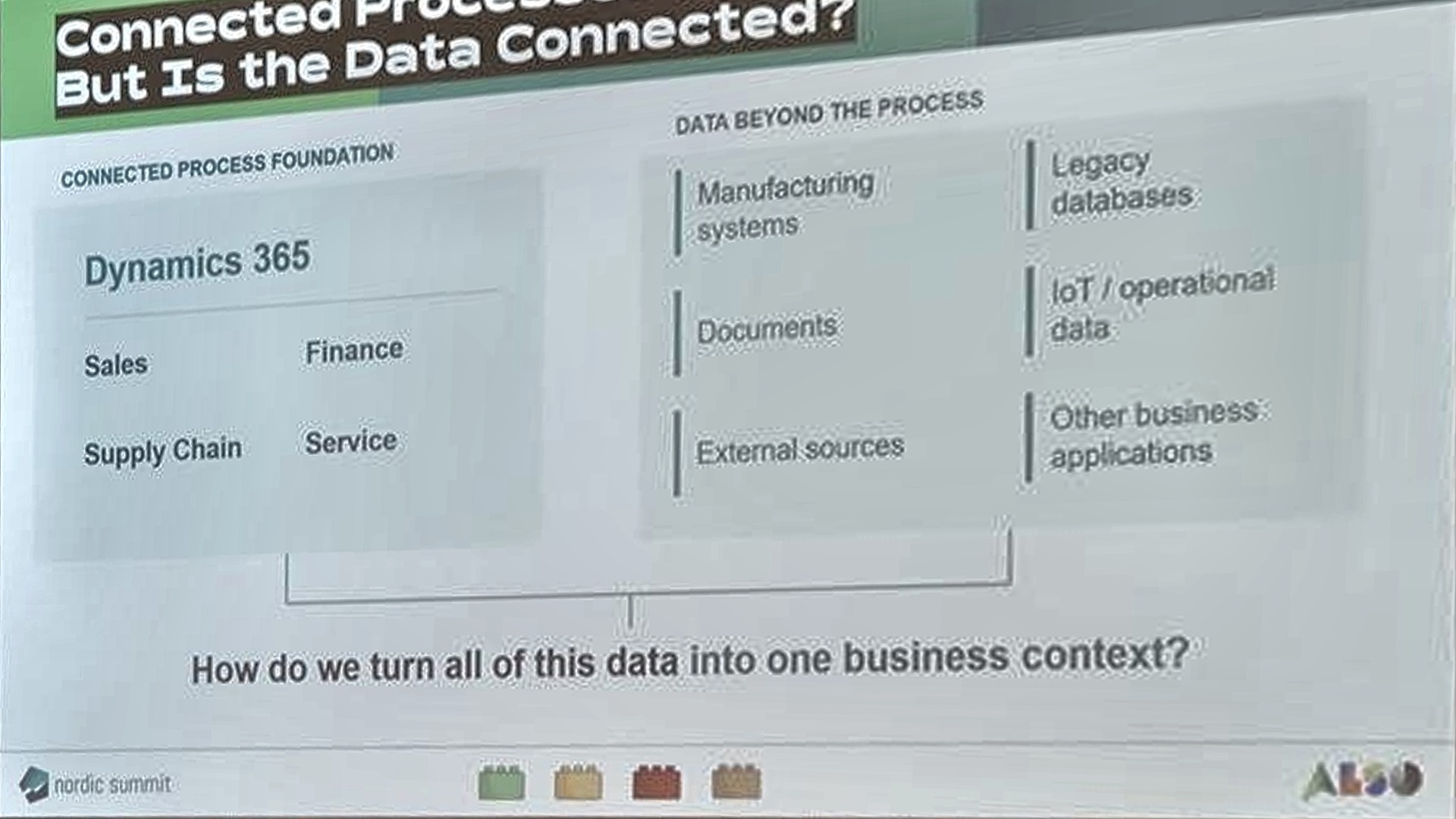
Their worked example was a supplier reporting a production delay. That is an event; the business question is what it means. Do we have stock in another warehouse, is there an alternative supplier, which customers are affected, which of them has already complained about a late delivery, what is the margin exposure? Answering that needs the process data from Dynamics plus operational context plus external context: logistics disruption, strikes, and so on.
The platform answer was Microsoft Fabric as the centralised data platform, which they described as mostly the Azure data services bundled and delivered as a service, with a connector to plug Dynamics data straight in. Then Copilot on top, so that instead of a person assembling the answer, someone can ask what the impact of the supplier delay is and get a response grounded in governed business context, with the agent proposing the next steps: substitute the item, expedite the delivery, notify sales and procurement.
Their own caveat was the one everyone at this conference has been repeating: keep the human accountable for approval. The agent proposes, a person decides, and then the agent executes and creates the follow-up tasks.
The portfolio, end to end
The last two speakers walked the Microsoft AI portfolio from the top down, and this was the part where a sponsor session is a sponsor session: Copilot experiences at the top, agents and business process automation below, a model catalogue under that, and security, responsible AI, governance, data and infrastructure as the foundation.
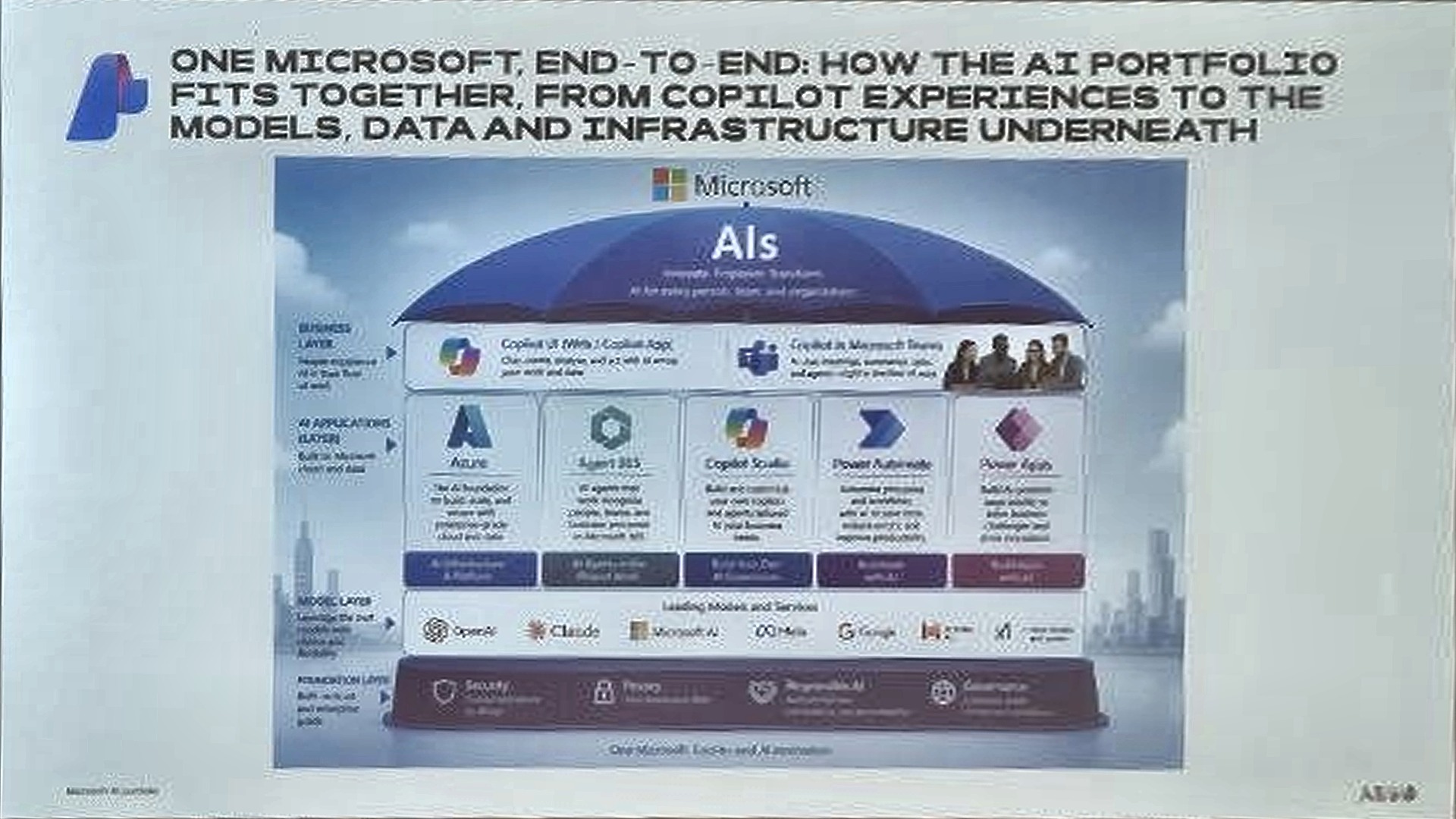
Two things in that part were worth noting for anyone building agents. Foundry IQ, which they said is still partly in preview, is the knowledge layer for agents: it plans the query, searches across sources, ranks what is relevant, applies the user’s permissions so an agent cannot return data the person asking is not allowed to see, and returns answers with citations you can check. And on the data side, Fabric IQ lets people chat with business data in natural language with the same access model applied.
The security closer covered Purview for classification, labelling and protection as data moves across Microsoft 365, devices, Copilots, AI apps and third-party services, and Defender for correlating attack signals across domains into one incident rather than separate alerts for each hop. The tagline was that being AI-ready means being secure end to end.
Distributor sessions are what they are, and this one was a portfolio walk rather than a set of measurements. But the sequencing argument at the start stands on its own: connect the processes, then look at the data that never entered them, and only then put an agent in front of the result.