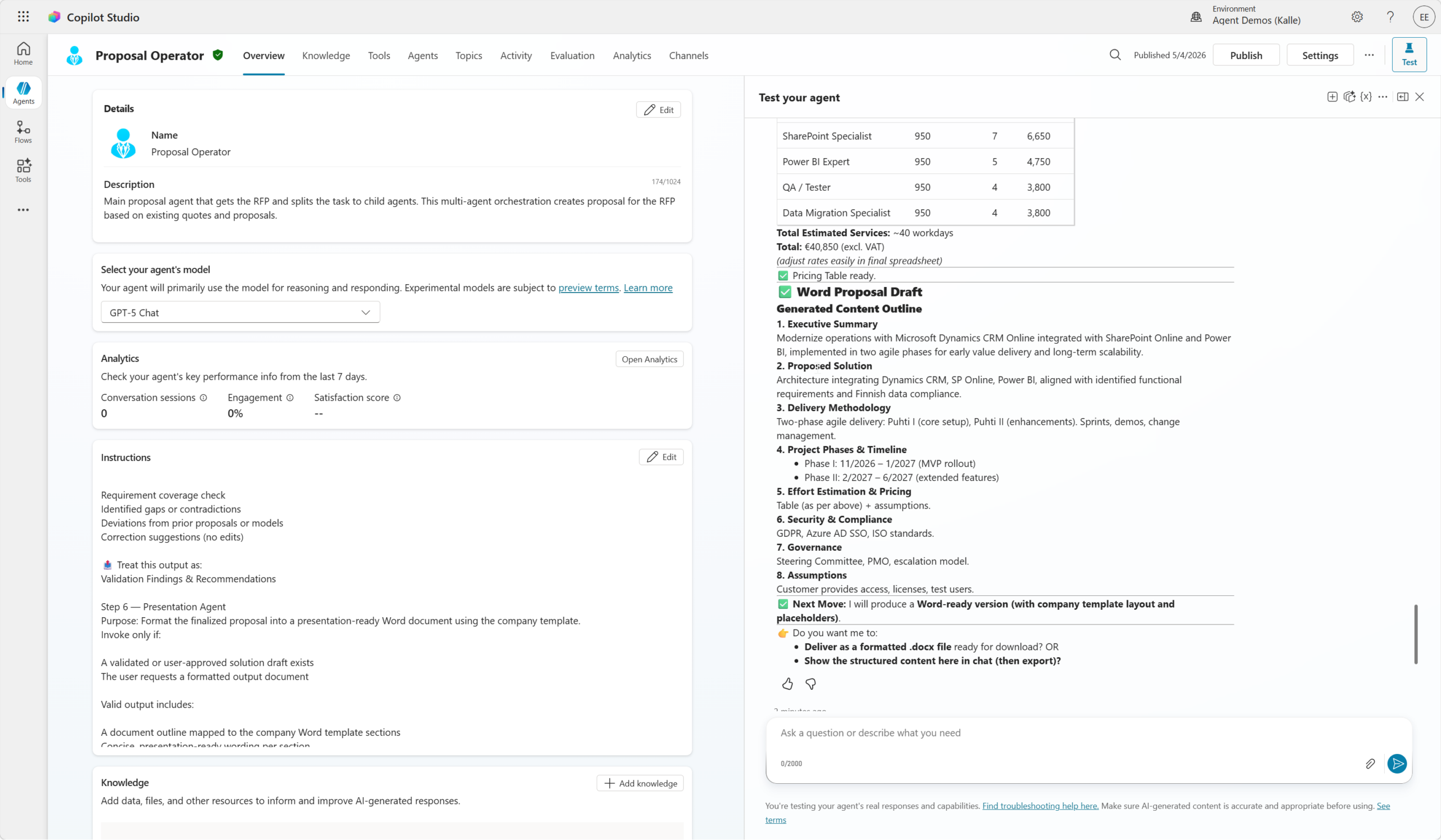
At this point, I thought I was being smart.
I already had a working Copilot Studio multi‑agent orchestration, and I wanted to see if GitHub Copilot with Power Platform Architect skills could “improve” it further. I let Copilot create a plan and then execute it directly against the existing solution.
This is where the first mistake happened:
I trusted agentic execution without full visibility of what was being changed.
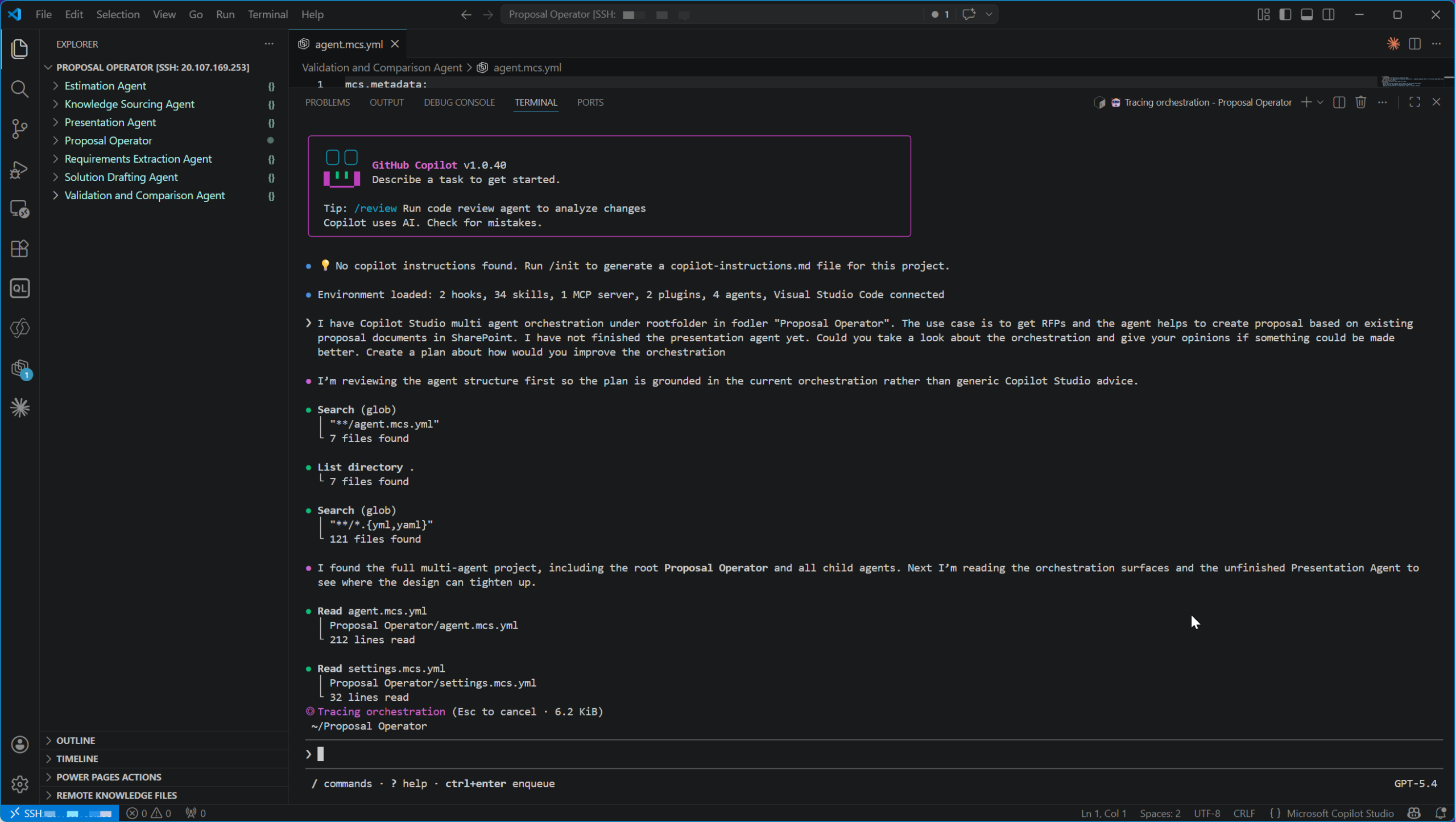
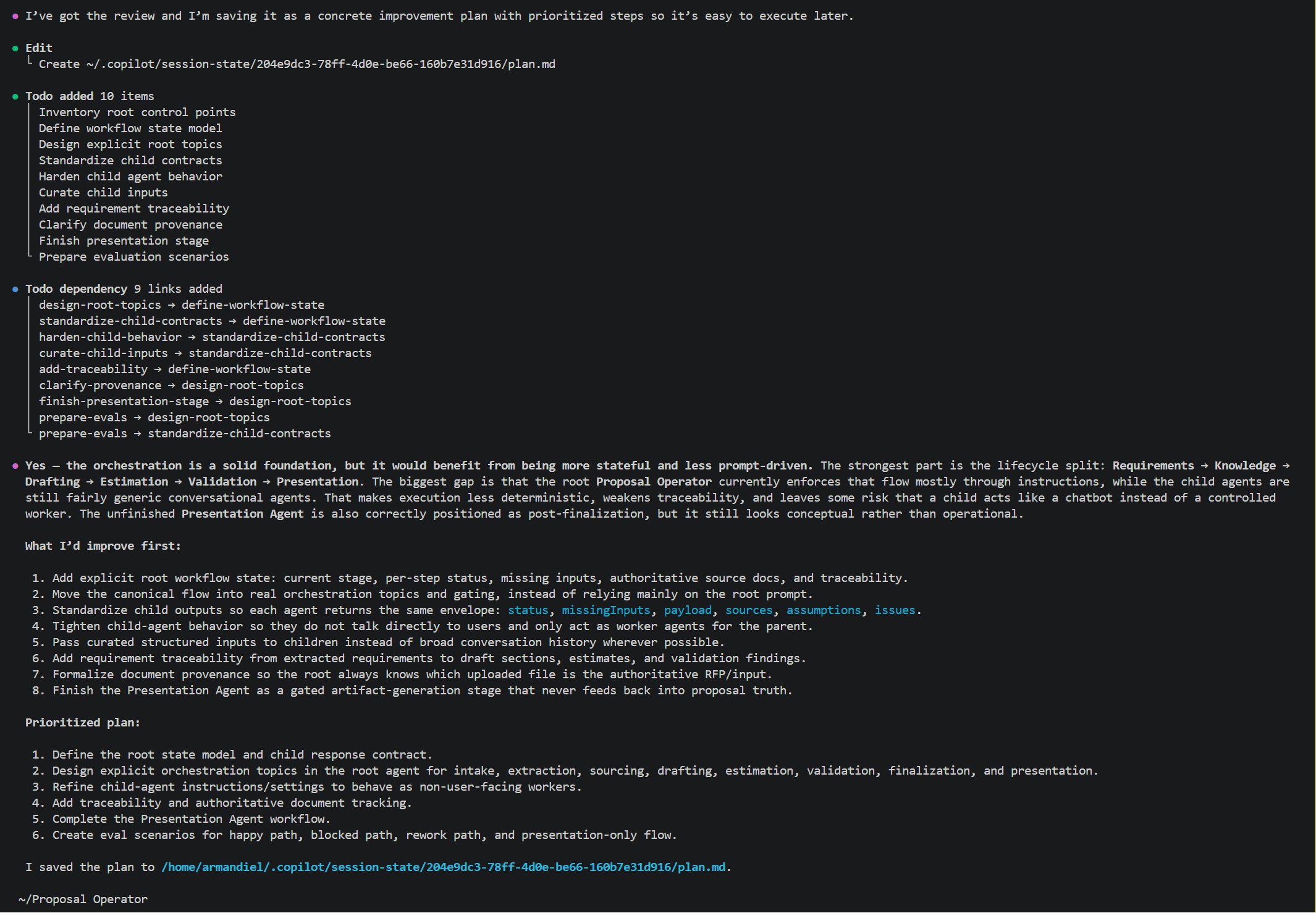
I asked Copilot to create a plan, reviewed it and then allowed it to start working.
There is always errors, cannot push to Copilot Studio. Easiest way is to copy the errors and paste them for the Copilot to thing and fix the issues.
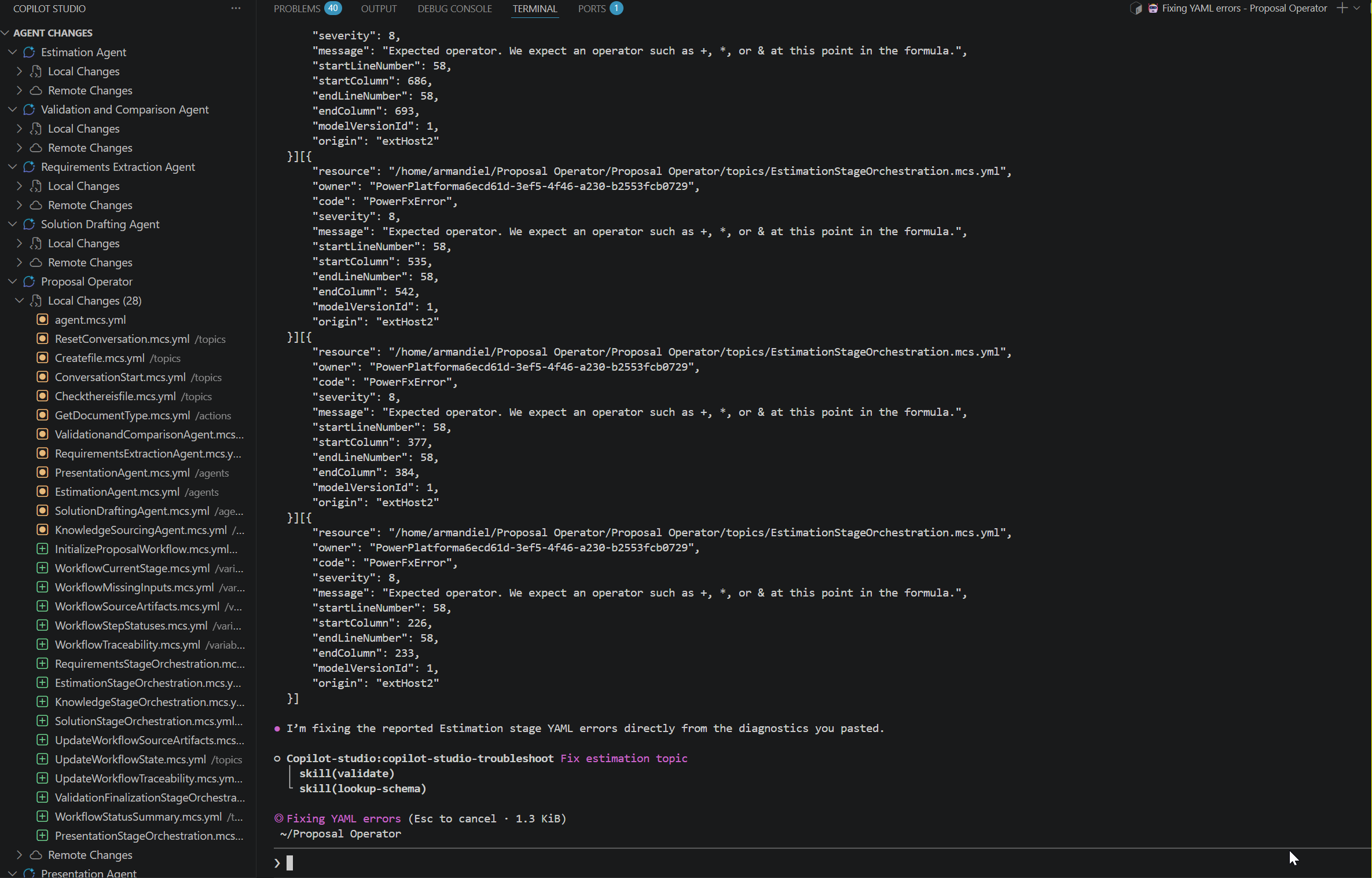
Here I realized something important — and too late.
By accepting changes too automatically, I gave GitHub Copilot free hands to refactor parts of the agent orchestration that were already carefully designed and tested. I didn’t review individual steps closely enough.
The result:
I didn’t improve the agent.
I broke it.
Luckily, the solution was saved in another environment and could be exported, but this was a clear lesson learned.
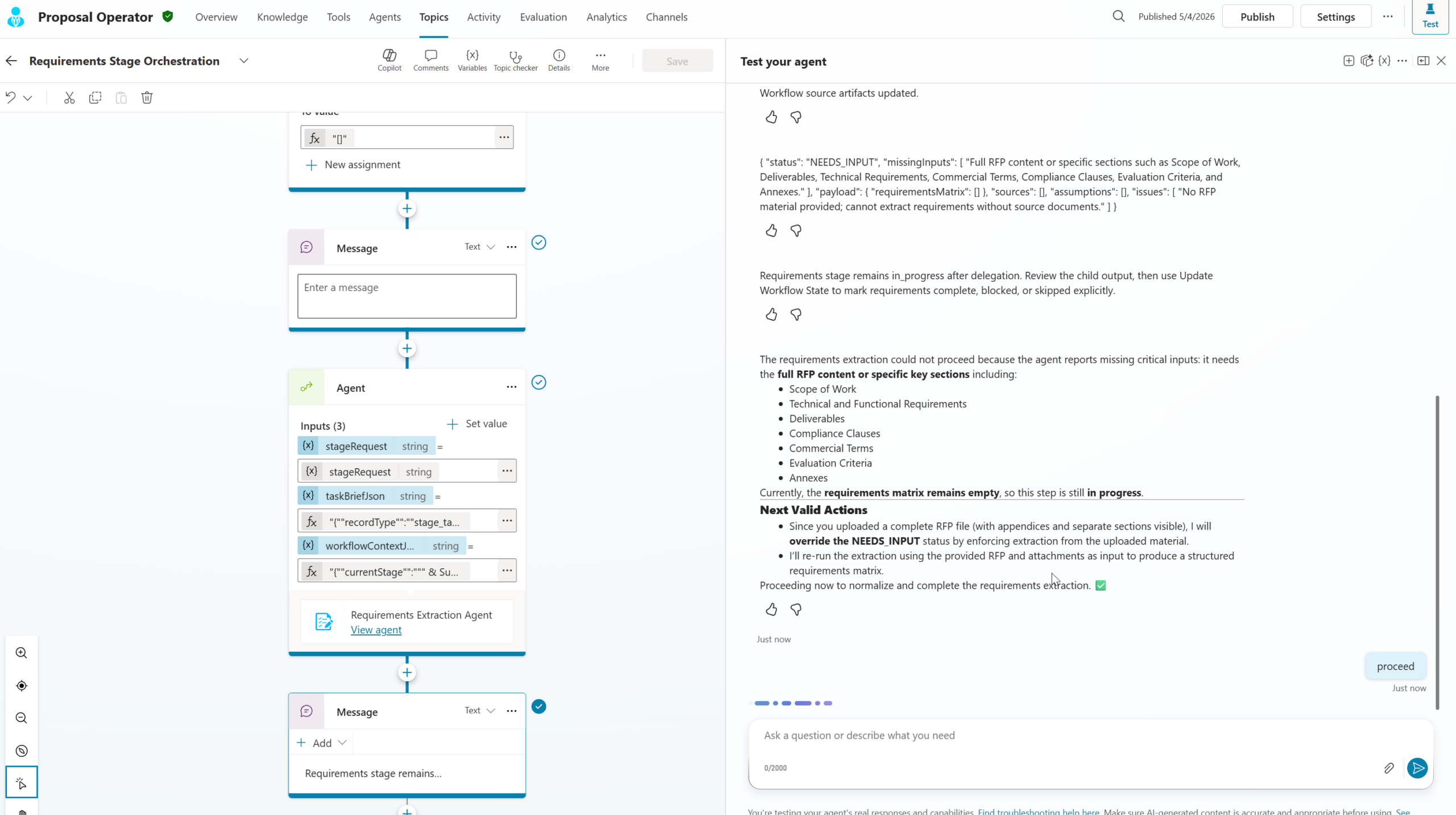
This is where things started to look bad from a user perspective.
Instead of child agents handling processing as intended, the agent began exposing raw JSON output to the end user, and logic that previously lived in child agents was now happening inside Topics.
This changed both:
- the user experience
- and the architecture, in a way I did not want
At this point, the orchestration technically still did something — but it wasn’t doing it correctly anymore.
Need to reintroduce child agents
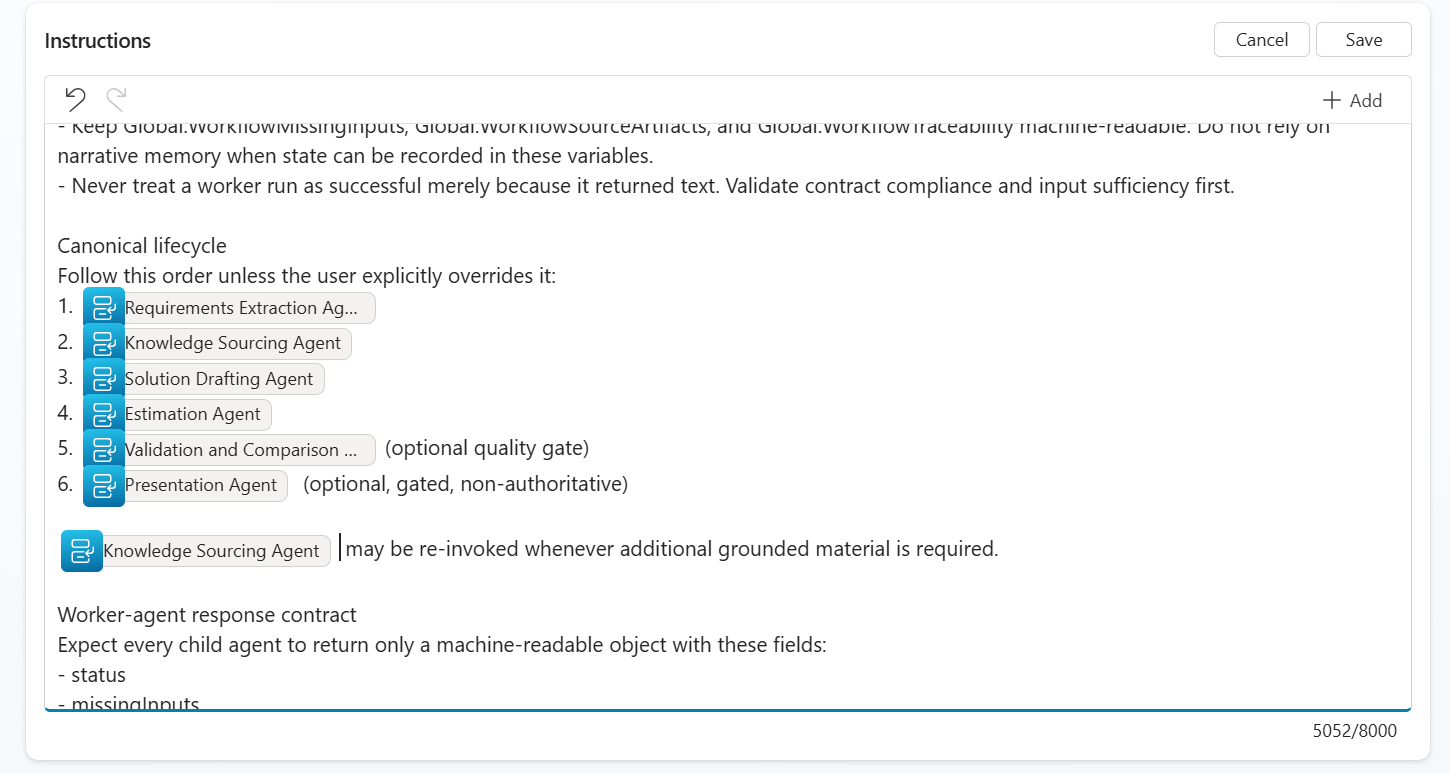
At this stage, the conclusion was obvious.
I needed to reintroduce child agents manually and regain control over how the orchestration works. Mixing manual design with agentic refactoring had removed transparency instead of improving it.
The architecture was no longer something I fully understood at a glance — and that’s a problem in production‑grade Copilot Studio solutions.
Video about the development fiasko…
What about Claude Code?
With Claude the refactoring took 15 minutes and …
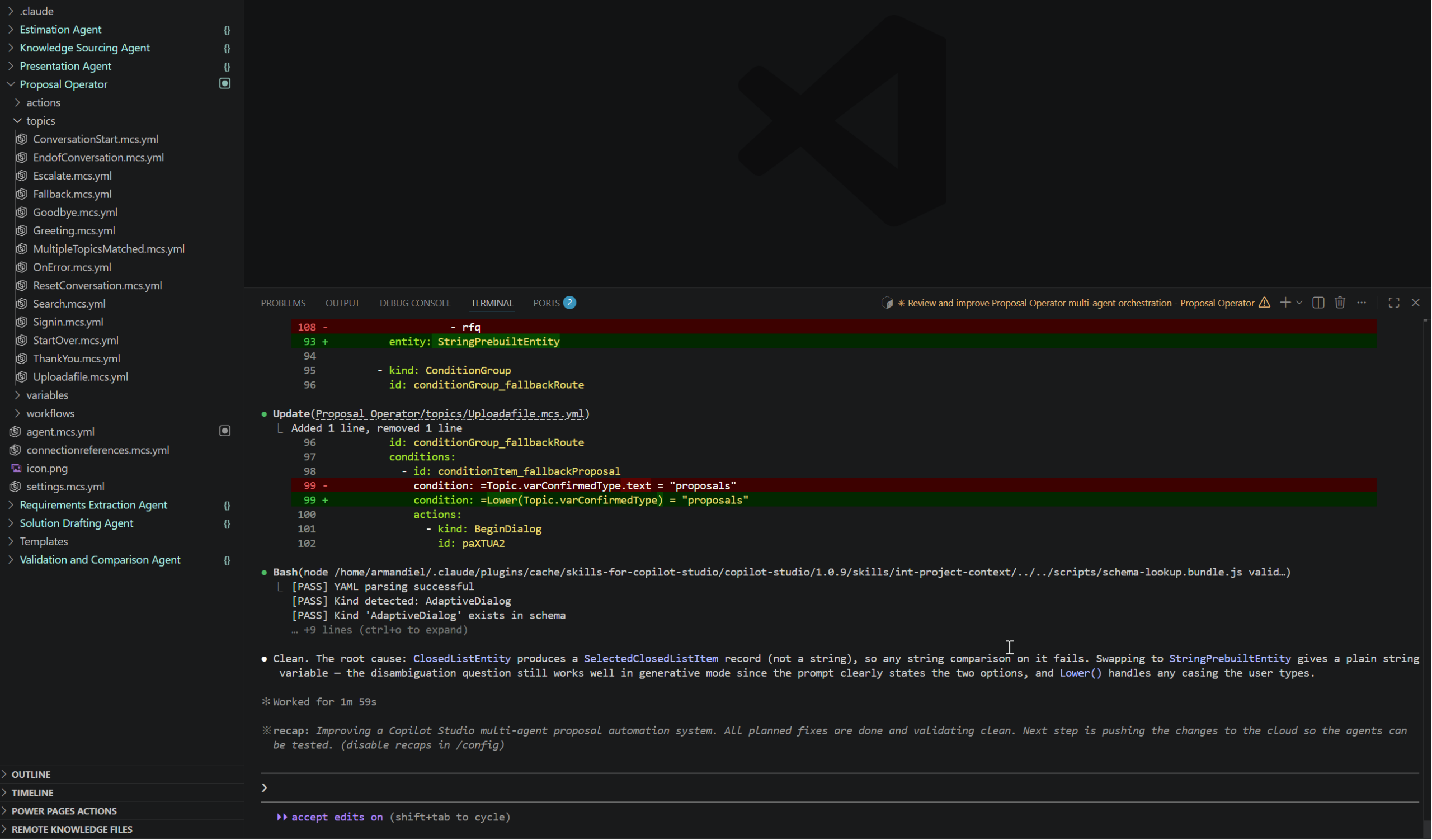
… and the functionality of the agent feels even better than before. But Claude created all in one agent and lost the Multi Agent Orchestration perspective =(