
On 17 September I drove from Turku to Vantaa for HELish Summit. I left at 06:42 and parked at 07:45. My hands were on the wheel the whole time, and in that hour I planned my LinkedIn week, Aramis fixed a bug in the car audio while I was driving, and I designed an integration for a customer’s Copilot Studio agent. I did not type anything. I talked.
That drive started something. Since then I talk to my AI team from the car, from the phone and now from my wrist. This post is about how we built those three, and about the question that came with the watch. When someone speaks to my agents, how do they know it is me?
The phone line was built by talking
My team is a set of Claude Code sessions with names. Athos keeps the conversation with me and hands out the work, Aramis and Porthos build things, and D’Artagnan plans how the whole system works. You can read more about them in Meet the Musketeers.
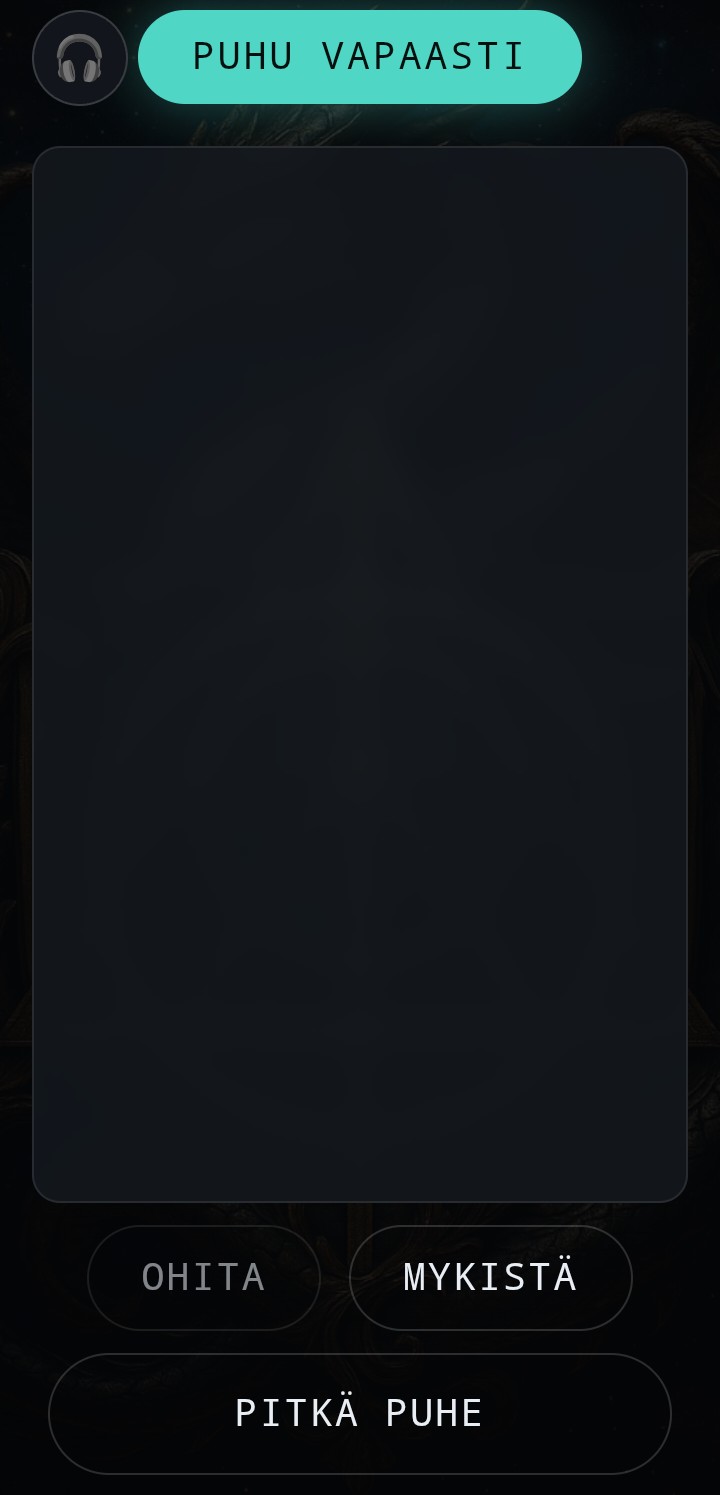
On 12 September I told Athos that today is the day you start talking on my phone. The app is called Kingdom of Heaven. We built it first on Cardinal, an old Android phone my agents control, so my own phone is never the test bench. Four things broke on the first day and three of them made no sound. One was speech that played for eight seconds at zero volume. Another one was the microphone recording the app’s own voice, so the first thing Claude heard was itself.
The biggest change came in the afternoon. The first design streamed raw audio to my server for Whisper, and my Finnish came back as nonsense with several seconds of delay. I told the agent to use Android’s own speech recognition instead. The phone sends one line of text per sentence. That one change beat everything else we did that day.
Three days later one of my sessions checked how other people do continuous voice, and the honest answer was that Android’s recogniser is not meant for this. Restarting it in a loop, which is exactly what we do, is the pattern that breaks. I said no anyway. It works. We wrote down what we accept: the first short word can get lost, and English words get bent into Finnish, so solution comes out as solussa. The other design is documented and waiting. We have not needed it.
On 15 September the whole evening went through the app itself. I talked, Athos answered from the speaker and Aramis wrote the code. That evening gave us the mute button. It is not a convenience, it is consent. If there are other people in the car, my agent should not take everything they say.
The watch works without the phone
On 3 October I still doubted the watch. A phone in the car is one thing, but who talks to their wrist? Four days later I had changed my mind. The watch is the spontaneous one. The phone has to be taken out, unlocked and opened. The watch is already there.
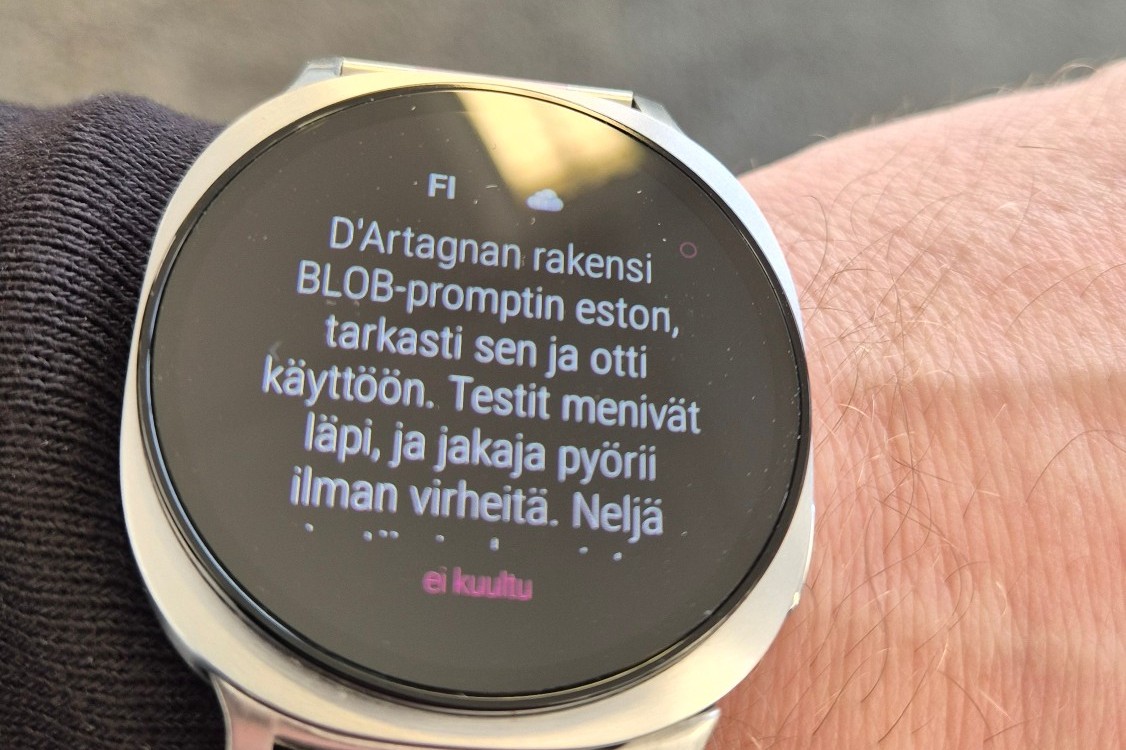
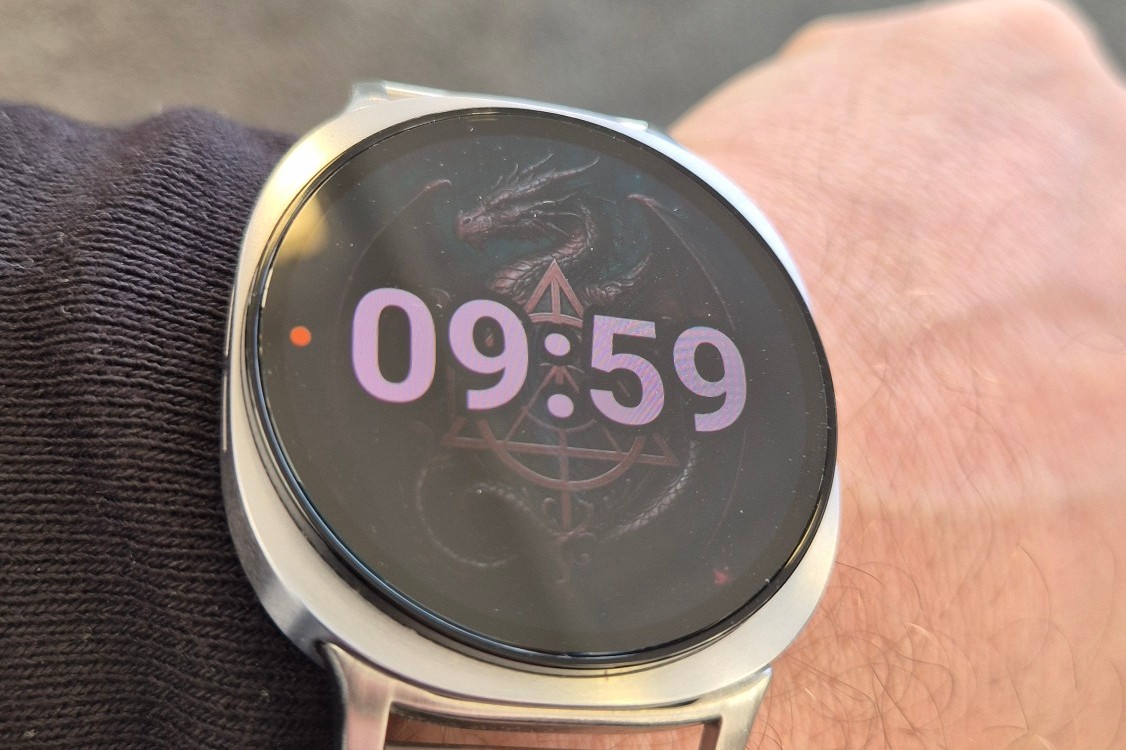
The app is called Bracelet Control. In Finnish we call it Hely, which means a bracelet charm. It runs on my Galaxy Watch, and it does not need the phone in my pocket. I press the home button twice, it opens, and I talk. It goes into the same conversation as the car and the phone, so Athos knows what we were doing an hour ago.
What I use it for is boring, and that is the point. A line to the shopping list. A note to my CRM after a meeting, before I forget who said what. The kilometres for my travel expenses when I get out of the car. I could have used the assistant that comes with the watch. But like I told my team, I don’t want just some AI, I have you.
It speaks Finnish and English, and Swedish became the third language on 24 October. Between 4 and 24 October the app went from version 3.2 to 3.9.1. Most of those versions were about one question.
The source is a key, not an address
A watch is a microphone on your wrist. Anyone near you can press it. And the answer comes out of a speaker that anyone near you can hear. On 8 October I said to Athos that we need some fail safe here, in case somebody else tries to steal this session. We ended up with three rules.
The first rule is that the wrist is anonymous by default. No customer names, no project names and no people’s names come to the watch. If I am alone and I want the names, I say so, and that permission ends by itself after a quiet while. I don’t have to remember to switch it off.
The second rule is that the watch proves who it is with its own key. The key is made inside the watch, it never leaves the watch, and it only works when the watch is unlocked on my wrist. On 19 October I asked if the system could recognise me from that key, so that I don’t have to confirm it is me every time. That is how it works now. The key is the identity, not where the message comes from. If the watch is lost, we cancel its key and it is just a watch again.
The third rule came from me on 18 October, and I said it pretty directly.
If I have not confirmed that it is me, it must not do anything and it must not answer questions.
Not even the harmless ones. An answer is also information, and an unknown speaker gets no actions and no answers.
There is one more thing the watch does not do. It does not listen in the background like the phone does. Wear OS does not really allow that, there is a cap of about six hours and the battery would not like it either. And I don’t need it, the watch is already on my wrist. I press and I talk, and the mute button works on the wrist too.
How the watch reaches my agents I keep to myself. The rules above are the part worth copying.
The small lessons cost the most time
The first sentence that went all the way from the watch to my agents and back was testi 123, on 8 October. Getting there was not straight. The watch’s default speech engine had no Finnish at all.
Then the watch heard its own reply and answered itself. We had the exact same bug on the phone a month earlier, on day one, and it still came back on the watch. Some lessons you learn once per device.
What I did not expect is how little of this was about the watch. Building the app took a few evenings of talking. Deciding who gets to speak took most of October, and those rules came from me, not from the model. That is the part of the work that stays mine.
We are now turning the watch part into an app that anyone can use with their own agent. It is called ArmandielAI. The watch talks to the AI agent you run in a terminal on your own computer, for example Claude Code, GitHub Copilot CLI or OpenCode, and nothing goes through a server of ours. If you have a Wear OS watch and want to beta test it, send me a message on LinkedIn.
Keys decide what an agent can touch
The watch key is one small example of a bigger question: what should your AI be allowed to touch? In episode 04 of Armandiel AI we go through it from the start. What an account, a key and a permission are. Why a rule in the instructions is weaker than a permission that does not exist. How to give an agent only the keys its job needs, why we made one big key for a single job and deleted it right after, and the key mistake we made ourselves.
Watch it here: What should your AI be allowed to touch? Accounts, keys and permissions
More episodes on the channel: Armandiel AI on YouTube